Leading Naval Nuclear Infrastructure and Sovereign Sustainment Capability
Leading Naval Nuclear Infrastructure and Sovereign Sustainment Capability
Executive leadership across nuclear submarine lifecycle support, secure defence infrastructure, regulated estate delivery, and sovereign sustainment environments aligned to AUKUS capability requirements.
Executive leadership across nuclear submarine lifecycle support, secure defence infrastructure, regulated estate delivery, and sovereign sustainment activity relevant to AUKUS capability requirements.
Executive leadership across nuclear submarine lifecycle support, secure defence infrastructure, regulated estate delivery, and sovereign sustainment environments aligned to AUKUS capability requirements.
Multi-site naval infrastructure and sustainment environments supporting carrier, submarine, and surface fleet capability.
Multi-site naval infrastructure and sustainment environments supporting carrier, submarine, and surface fleet capability.
Nuclear Submarine Lifecycle | Secure Defence Infrastructure
HMNB Clyde | Devonport | Barrow | Rosyth | Collins Class
AUKUS-Relevant Governance | Sovereign Sustainment
Nuclear Submarine Lifecycle Secure Defence Infrastructure
HMNB Clyde | Devonport Barrow | Rosyth | Collins Class
AUKUS-Relevant Governance Sovereign Sustainment
Enterprise Overview
Executive leadership across naval nuclear infrastructure, submarine lifecycle support, secure defence estate environments, and sovereign sustainment activity linked to the United Kingdom’s continuous at-sea deterrent, wider submarine capability, and Australian submarine sustainment.
Experience spans the nuclear submarine support lifecycle, including platform construction, fleet-time support, capability upgrades, mid-cycle dockings, full-cycle refits, refuelling support, long-term lay-up, dismantling, and nuclear-related estate infrastructure. Activities were undertaken across highly regulated defence environments including HMNB Clyde, HMNB Devonport, Barrow-in-Furness, and Rosyth.
In Australia, led operational teams supporting ASC in the sustainment of Collins Class submarines in Western Australia. This included workforce mobilisation, industrial services, governance, delivery coordination, and operational support within a sovereign submarine sustainment environment.
Responsibilities were held across client-side, contractor-side, Tier 1, and Tier 2 delivery settings, including Babcock International, the UK Ministry of Defence, Defence Estates, and executive leadership roles supporting BAE Systems, Babcock, ASC, and other sovereign defence partners.
The work required disciplined governance, nuclear safety case awareness, statutory compliance, high-security site operations, stakeholder coordination, delivery assurance, and operational continuity across environments where safety, security, availability, and public confidence were critical.
The same principles are directly relevant to Australia’s future nuclear-powered submarine pathway, where safe stewardship, infrastructure readiness, industrial capability, long-term sustainment assurance, and trusted delivery governance will be critical.
Executive Role
Held leadership responsibility across naval nuclear support, secure defence infrastructure, and submarine sustainment environments through progressive roles spanning Babcock International, the UK Ministry of Defence, and senior executive positions in Tier 2 delivery organisations supporting major Tier 1 defence contractors.
Early career roles provided direct exposure to naval dockyard operations, electrical systems, platform support, weapons integration, commissioning, refit activity, and nuclear submarine sustainment within highly controlled defence environments.
As a senior representative within UK Defence Estates, led client-side infrastructure planning, governance, stakeholder coordination, and project sponsorship across sensitive defence estate environments, including HMNB Clyde and RNAD Coulport, where operational readiness, nuclear safety case discipline, secure infrastructure, and stakeholder assurance were central to delivery.
At executive level, held accountability for multi-site industrial and sustainment operations supporting submarine build, nuclear fleet maintenance, surface fleet activity, secure dockyard infrastructure, and specialist industrial services delivered through Babcock, BAE Systems, and other sovereign defence partners.
Responsibilities included operational governance, workforce mobilisation, commercial performance, client interface management, safety assurance, technical compliance, delivery coordination, and support to programs undertaken across Barrow-in-Furness, Devonport, Rosyth, HMNB Clyde, Portsmouth, and other UK naval and industrial facilities.
In Australia, led operational teams supporting ASC in the sustainment of Collins Class submarines in Western Australia. This provided practical Australian experience in sovereign submarine sustainment, workforce mobilisation, operational governance, client interface management, and controlled delivery within a sensitive defence environment.
The role profile demonstrates executive capability across the environments that enable submarine availability, secure infrastructure readiness, regulated sustainment, and long-term sovereign defence capability.
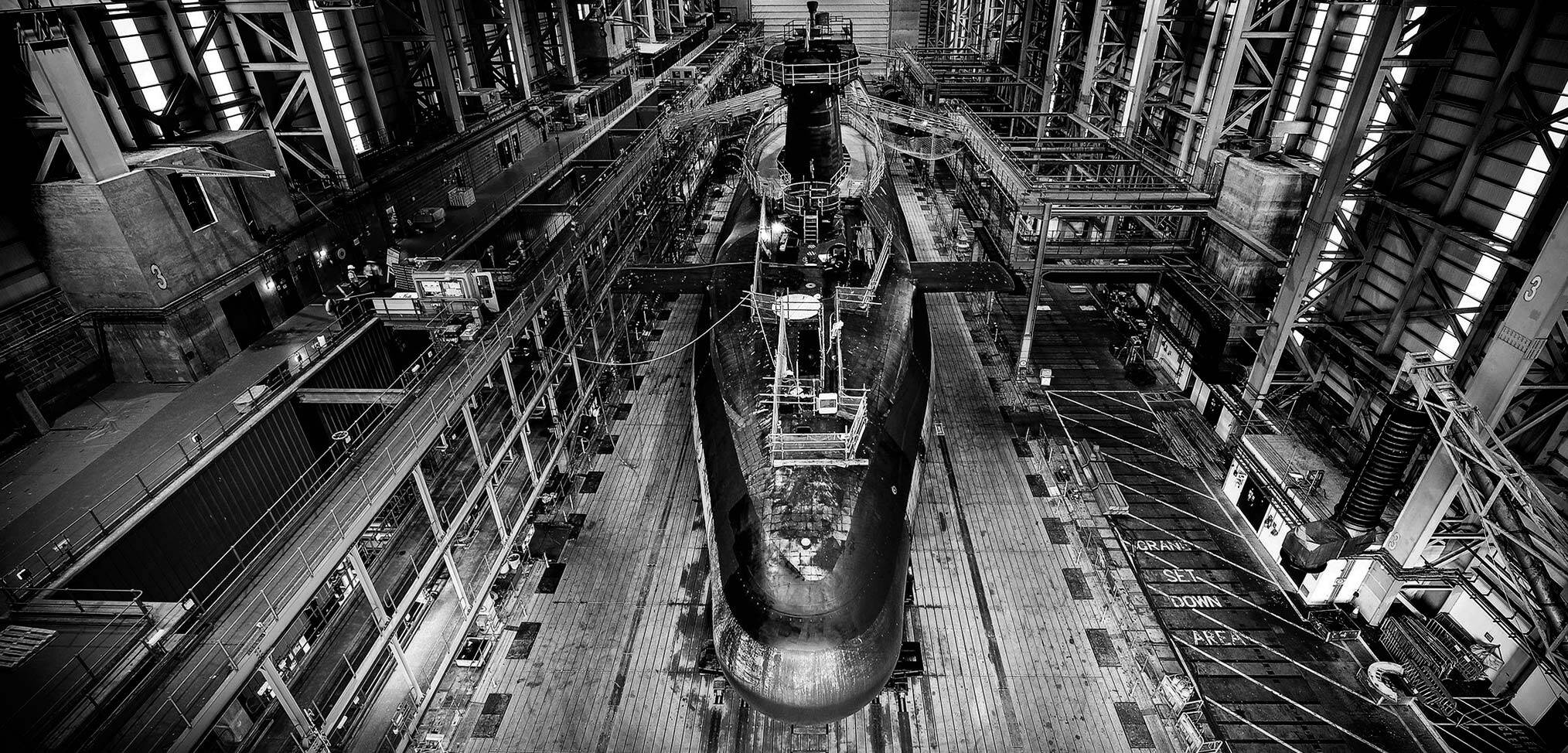
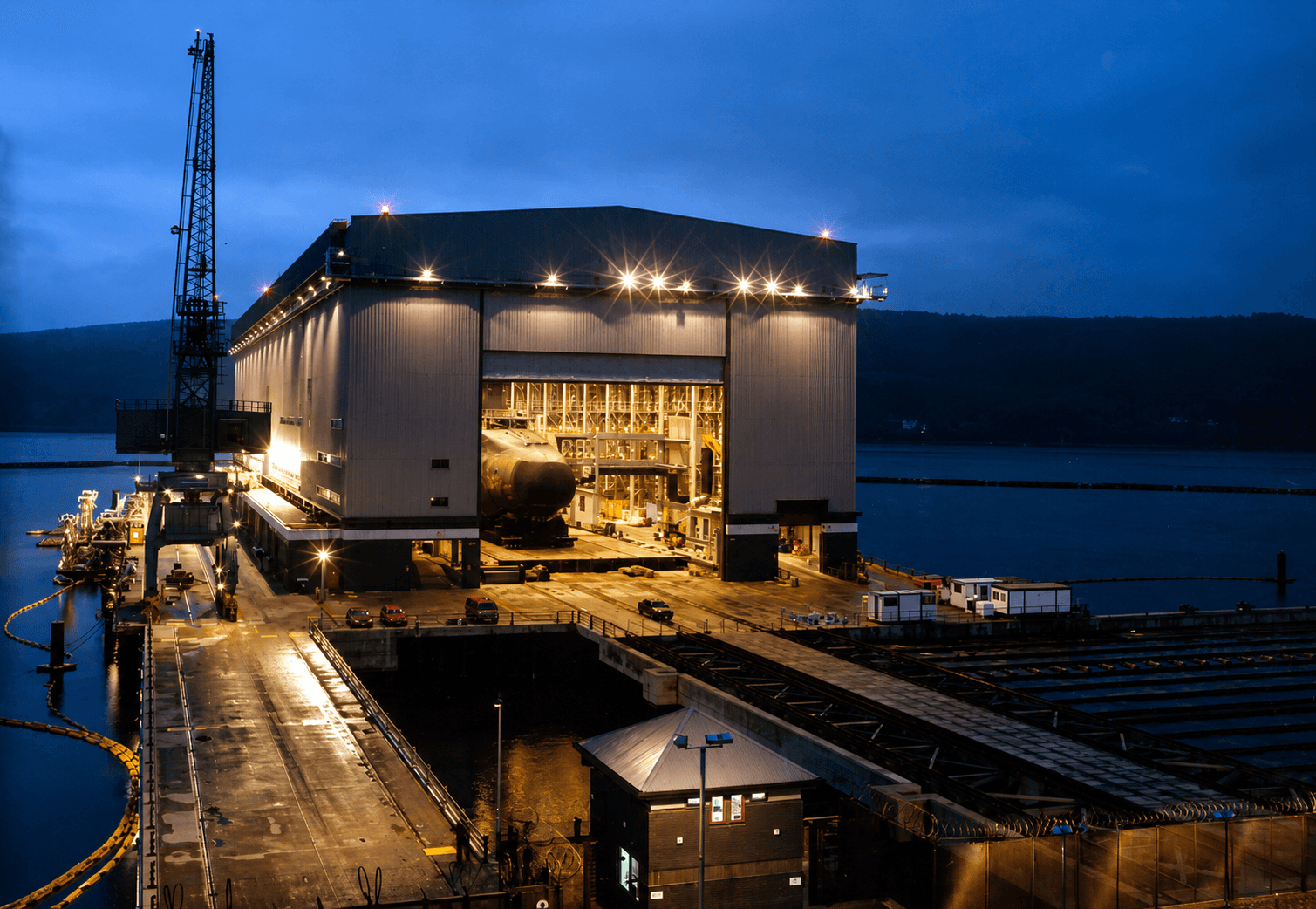
Secure submarine infrastructure supporting operational readiness, sustainment access, and long-term sovereign capability.
Strategic Challenge
Naval nuclear support environments operate under conditions where safety, security, technical compliance, operational readiness, and national confidence must be maintained at all times.
The challenge was not limited to individual submarine projects or estate works. It involved working across the wider system that enables nuclear submarine capability, including secure dockyard operations, platform build support, refit activity, fleet-time maintenance, infrastructure readiness, specialist industrial services, and long-term asset stewardship.
Delivery activities were undertaken across live operational bases, nuclear licensed facilities, secure dockyards, submarine build environments, and sensitive defence estate locations. These environments required strict adherence to nuclear safety case requirements, defence security protocols, operational access controls, quality assurance standards, and site specific governance arrangements.
Program complexity increased because multiple lifecycle stages often had to be supported at the same time. Platform construction, capability upgrades, mid-cycle dockings, full-cycle refits, fleet-time support, lay-up activity, dismantling preparation, and estate works often operated concurrently across different sites and under different prime contractor arrangements.
Stakeholder coordination was complex. Delivery required close working with defence clients, prime contractors, regulators, site security organisations, supply chain partners, operational users, and controlled workforce groups.
The same leadership challenge now sits at the centre of AUKUS. Australia’s future nuclear-powered submarine pathway will require secure infrastructure, trusted sustainment arrangements, trained workforce capability, disciplined governance, and mature safety and assurance practices. Experience supporting Collins Class sustainment in Western Australia provides a practical Australian reference point for that transition.
Executive Actions
Led executive coordination across naval nuclear support environments involving submarine lifecycle activity, secure dockyard operations, nuclear-related infrastructure, specialist industrial services, and regulated defence estate delivery.
Supported delivery across multiple stages of the submarine lifecycle, including build support, fleet-time maintenance, capability upgrades, mid-cycle dockings, full-cycle refit support, long-term lay-up, and dismantling-related workstreams.
Maintained governance across multi-site delivery environments supporting Babcock, BAE Systems, Ministry of Defence stakeholders, and other sovereign defence partners. Responsibilities included safety performance, commercial control, workforce deployment, delivery standards, quality assurance, stakeholder coordination, and compliance with site specific nuclear and defence requirements.
Led and supported infrastructure delivery associated with nuclear-related defence estate environments, including incident command facilities, submarine shiplift infrastructure, explosives handling assets, secure site upgrades, and operational support facilities at HMNB Clyde, RNAD Coulport, Rosyth, Devonport, and related defence locations.
Directed Tier 2 delivery teams operating under Tier 1 prime contractor frameworks, ensuring specialist industrial services were integrated into wider submarine build, sustainment, refit, and infrastructure programs without compromising safety, security, operational continuity, or client confidence.
Led Australian operational teams supporting ASC on Collins Class submarine sustainment in Western Australia, including workforce mobilisation, industrial services coordination, client engagement, operational governance, and delivery support within a sovereign submarine sustainment environment.
Provided executive leadership across the interfaces that matter in nuclear defence delivery: operational need, safety assurance, commercial discipline, regulated infrastructure, workforce capability, prime contractor coordination, and long-term sovereign sustainment outcomes.
Outcome & Strategic Impact
Established a long-term executive record across the support environments that enable nuclear submarine capability, including secure infrastructure, specialist industrial services, regulated sustainment activity, and full lifecycle support from build through to lay-up and dismantling.
Contributed to delivery continuity across some of the United Kingdom’s most sensitive naval nuclear environments, including HMNB Clyde, HMNB Devonport, Rosyth, and Barrow-in-Furness, where operational availability, nuclear safety, security, and stakeholder trust were critical to national defence outcomes.
Supported the UK nuclear submarine enterprise across multiple lifecycle phases, including Astute and Dreadnought build support, Vanguard and Trafalgar sustainment, fleet-time maintenance, mid-cycle docking activity, full-cycle refit support, long-term lay-up, and submarine dismantling preparation.
Provided a practical bridge between UK naval nuclear support experience and Australian submarine sustainment through leadership of operational teams supporting ASC on Collins Class sustainment in Western Australia. This demonstrated the transferability of controlled delivery practices, submarine support disciplines, workforce mobilisation, and sovereign sustainment governance.
The experience is directly relevant to AUKUS because Australia’s future nuclear-powered submarine capability will depend on more than platform acquisition. It will require mature infrastructure, trusted sustainment systems, disciplined governance, assured workforce capability, and safe long-term stewardship across secure and regulated defence environments.
This case study demonstrates executive-level capability across the support systems that allow nuclear submarine programs to operate safely, reliably, and with confidence across government, industry, prime contractor, regulatory, and operational defence environments.
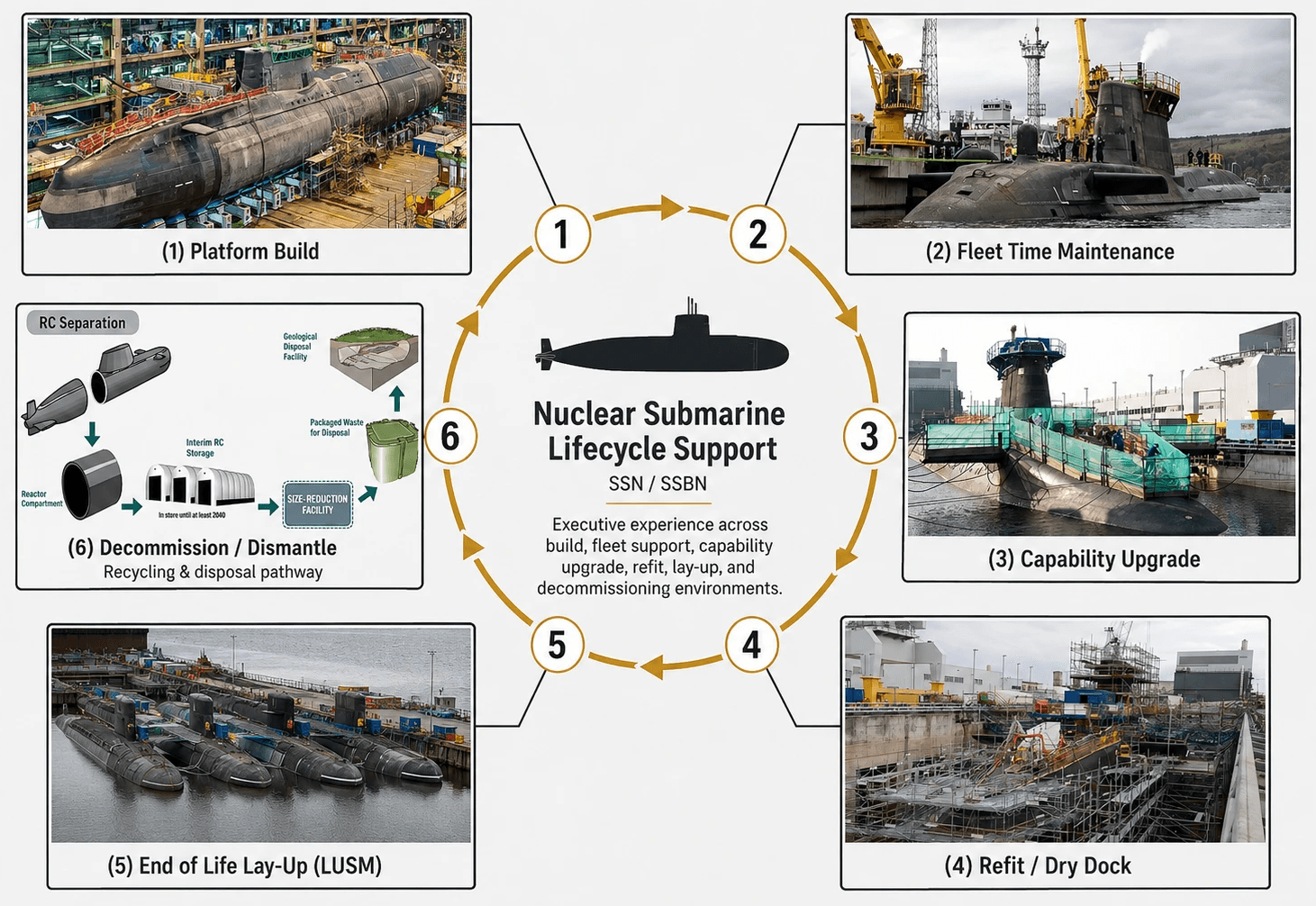
The lifecycle model below summarises the breadth of submarine support environments covered cross build, sustainment, capability upgrade, refit, preservation, and end-of-life stewardship.
Submarine lifecycle exposure spanning build, fleet-time support, capability upgrade, refit, lay-up, dismantling, and long-term stewardship.
Return to Home